
Building a home in California is a big job that requires more than just good construction skills. It also means following strict rules about energy efficiency. One of the important parts of this process is passing the Title 24 HVAC inspection. If you fail this inspection it can cause delays, extra costs. You may have to do the testing again which can all affect your construction schedule and budget.
The good news is that most of the time inspection failures can be avoided if you plan to properly install things and make sure that builders, HVAC contractors and certified HERS professionals work together. This guide will explain what builders need to know to pass the Title 24 HVAC inspection.
What are common checks?
California has rules about HVAC systems that are meant to make them work better and use energy. There are things that need to be checked to make sure these systems meet the rules. Some of the common Title 24 HVAC inspection include:
Duct Leakage Testing
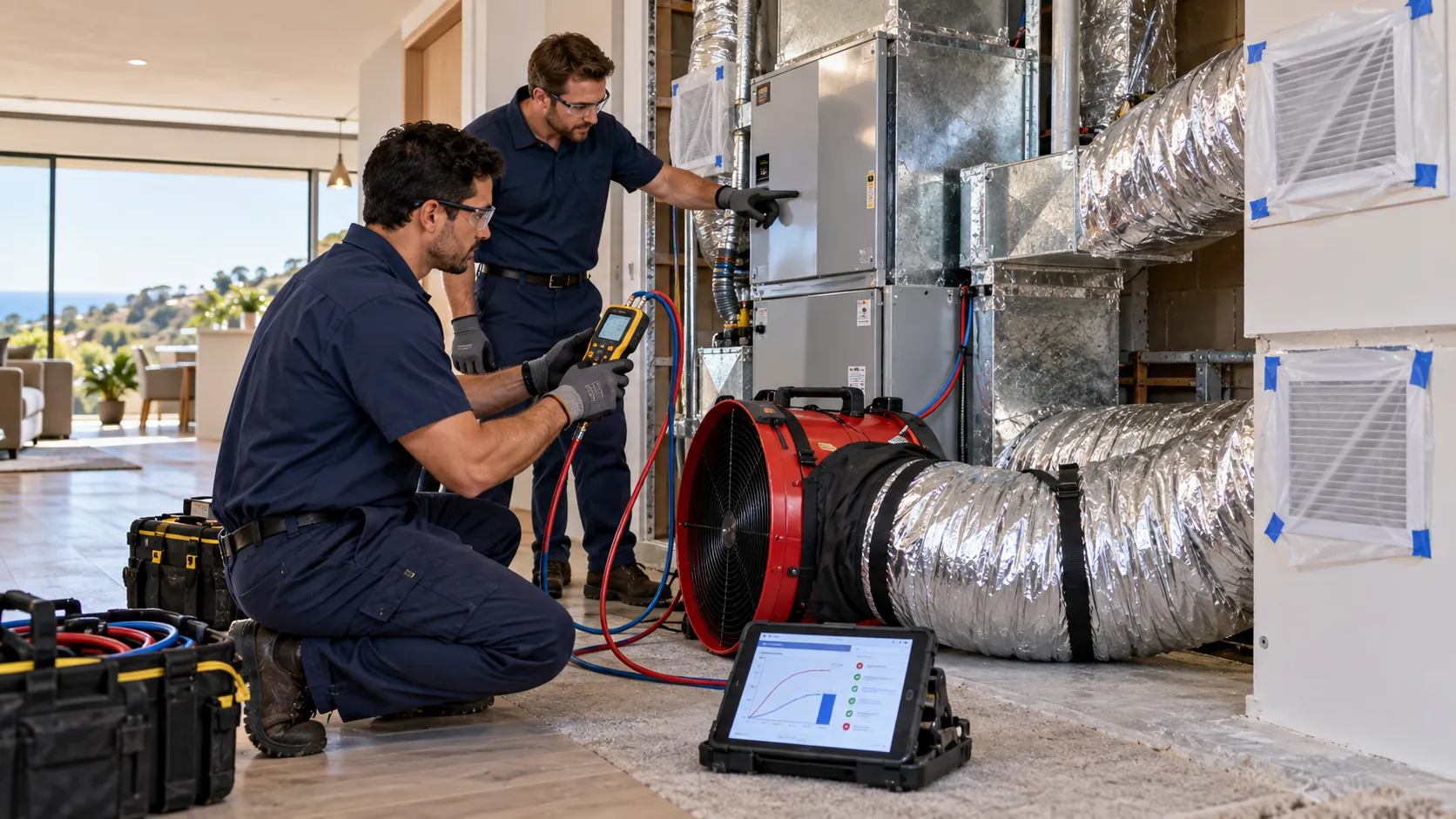
Duct leaks are a big reason why HVAC systems lose energy. Even small leaks can let air that has been heated or cooled escape into the crawl space or walls before it gets to the living areas. When they do duct leakage testing they use equipment to see how much air is escaping from the ducts.
If the ducts are sealed properly it has benefits, including:
- The heating and cooling work better
- Your utility bills are lower
- The air inside is more comfortable
- The HVAC equipment does not get worn out as fast
- The temperature is more consistent in each room
Builders should make sure all the duct joints, seams and connections are sealed according to the rules before they schedule the testing.
Airflow Verification
For an HVAC system to work well it needs to have airflow. Airflow Title 24 HVAC inspection is to make sure that enough air is moving across the evaporator coil and through the ducts in the home. If the airflow is poor it could be because:
- The ducts are small
- The vents are blocked
- The blower settings are wrong
- The installation was not done correctly
- The return air pathways are restricted
If the airflow is not good enough the system will not work as well, the air will not be as comfortable and the equipment may not last as long. Checking the airflow makes sure that the HVAC system is working the way it is supposed to according to the manufacturers rules and the Title 24 requirements.
Refrigerant Charge Verification
The right amount of refrigerant is necessary for the air conditioning to work efficiently. If there is no refrigerant it will not cool as well and if there is too much it can damage the system and use more energy.
During charge Title 24 HVAC inspection certified professionals check the system to make sure that the refrigerant charge is what the manufacturer recommends. If the refrigerant is charged correctly it helps to:
- Cool the air efficiently
- Lower the operating costs
- Make the compressor last longer
- Make the air more comfortable
- Make the system more reliable
The refrigerant should always be charged correctly before the inspection.
Insulation Requirements
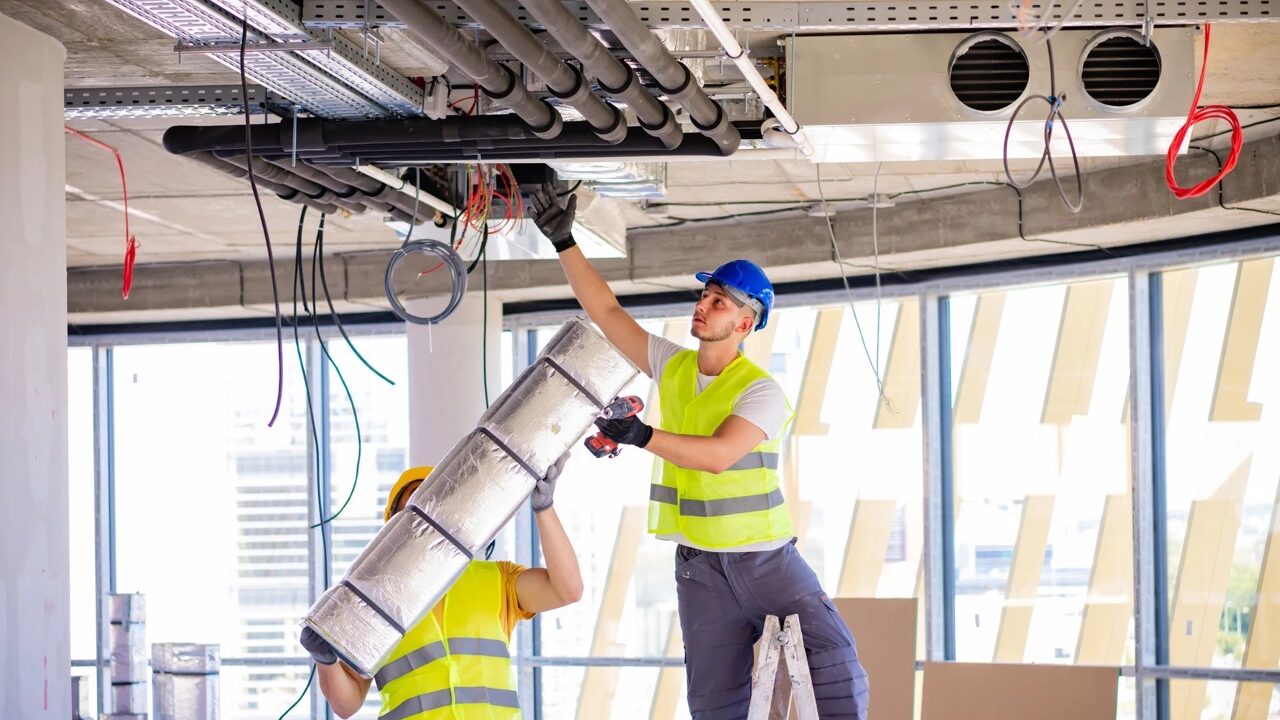
Insulation is really important for keeping your heating and cooling system working. California has rules called Title 24 HVAC inspection that say what the minimum insulation requirements are for ductwork and other parts of a building that affect how well your heating and cooling system works. Proper insulation helps in ways, such as:
- Reducing energy loss
- Keeping the temperature inside your home consistent
- Making your heating and cooling system work better
- Lowering your utility bills
- Preventing heat from getting in or out when it should not
Before you schedule the final inspection for your heating and cooling system you should check the insulation carefully to make sure it meets the rules.
Ensure Full System Operation
To make sure everything is working correctly you need to check a things:
- Thermostats have to function
- HVAC equipment has to operate normally
- Airflow has to reach all supply registers
- Return air pathways have to remain unobstructed
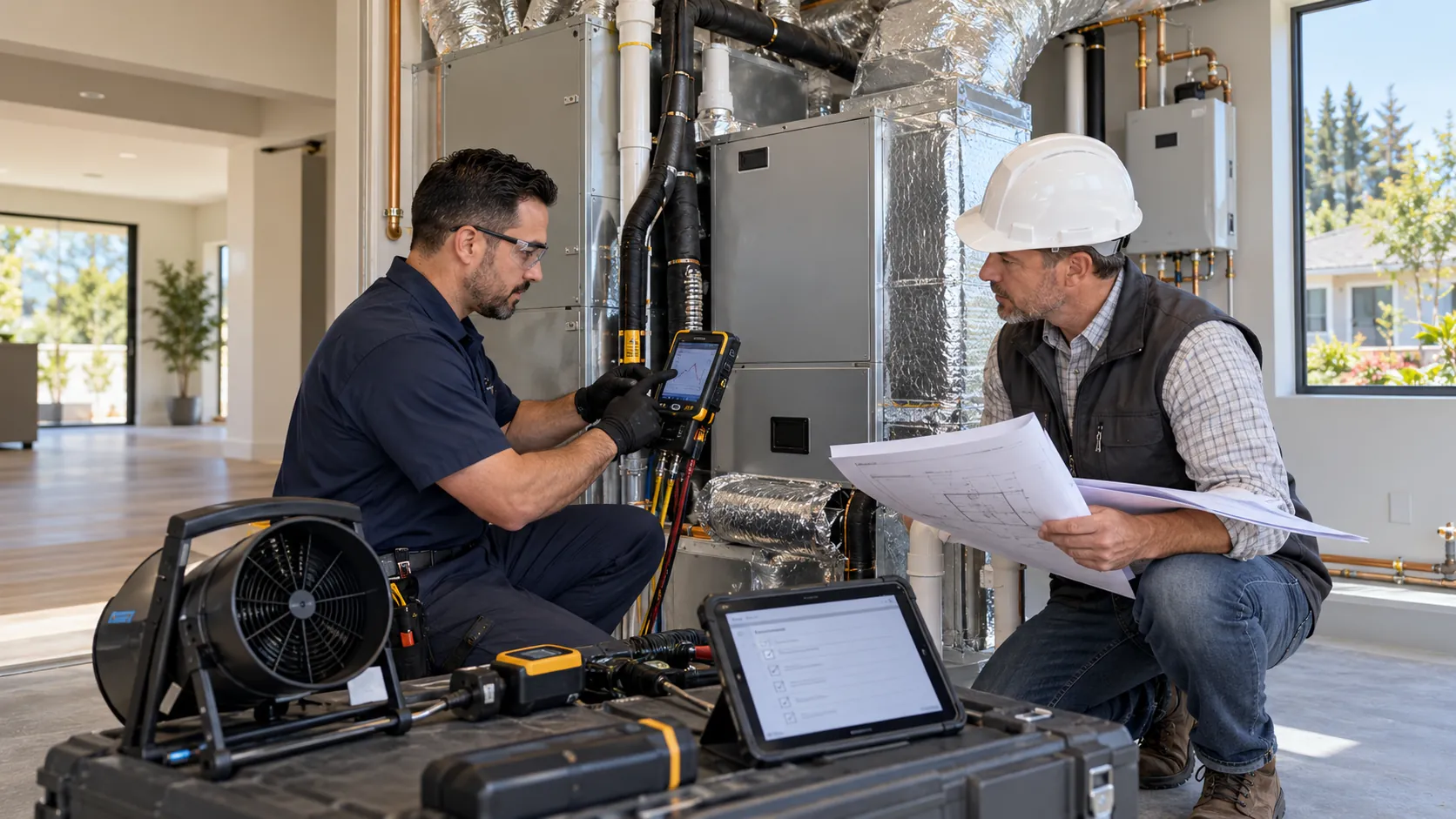
If the system is working properly it is more likely that you will pass the inspection on the first visit. When you are Working With a Certified HERS Rater you get a lot of benefits. Title 24 HVAC verification measures require testing by a certified HERS Rater. These HERS professionals do testing to confirm that HVAC systems meet California energy standards.
What are the advantages of Title 24 HVAC inspection?
Working with a HERS Rater has several advantages, such as:
- You get accurate performance testing
- You get code compliance expertise
- You can identify installation issues early
- You get reliable documentation
- Your project gets completed faster
- You reduce the risk of failed inspections
It is better for builders to involve HERS professionals early in the project rather than waiting until construction is complete.
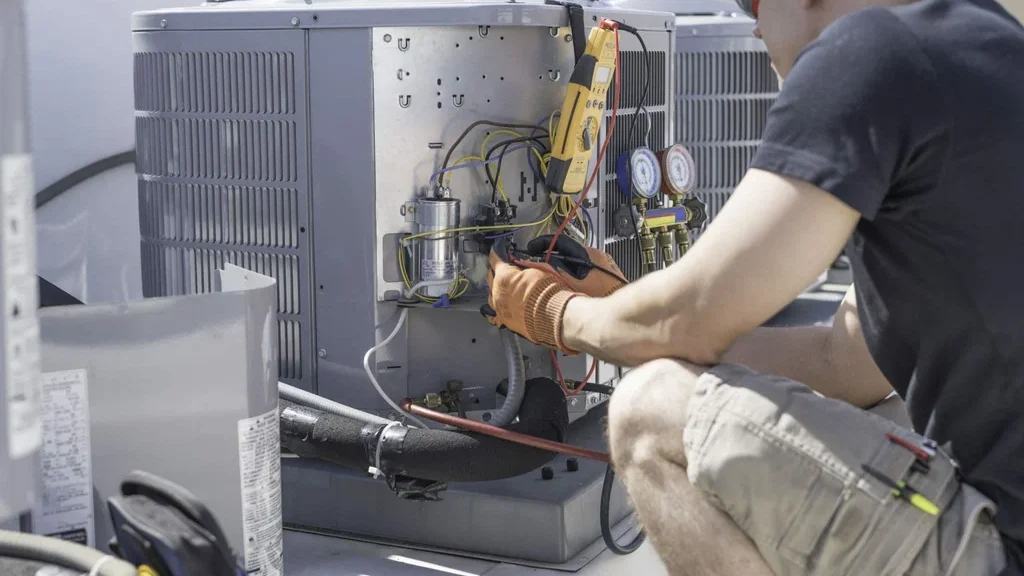
How does Title 24 HVAC inspection prevent issues?
When builders, HVAC contractors and HERS Raters communicate openly it creates a verification process and helps prevent scheduling conflicts. During the Final Title 24 HVAC inspection and Compliance Documentation once all required testing has been completed successfully the project moves toward approval. At this stage builders should ensure that:
- All HVAC testing has passed
- Required corrections have been completed
- Compliance forms are accurate
- HERS verification documents are submitted
- Installation certificates are complete
- Equipment information matches approved plans
If you keep your documentation organized it simplifies the approval process and helps avoid delays. Accurate paperwork is just as important as installation of HVAC systems. If you do not have documentation, even a properly functioning HVAC system may experience compliance issues.
Conclusion
In conclusion, passing a Title 24 HVAC inspection the first time requires planning, skilled installation and attention to detail throughout every stage of construction. By understanding the requirements, review the compliance and manage the internal quality checks. Builders test everything so that they can avoid the common mistakes.
By understanding California’s HVAC requirements, reviewing compliance documents, performing internal quality checks and working closely with experienced HVAC contractors and certified HERS Raters, builders can avoid common mistakes that lead to failed inspections.
FAQs
What is a Title 24 HVAC inspection?
A Title 24 HVAC inspection verifies that a heating and cooling system, which is also known as an HVAC system complies with California’s energy efficiency standards, through inspections, testing and required documentation.
Who needs a Title 24 HVAC inspection?
Residential construction, certain additions HVAC replacements and qualifying remodeling projects typically require a Title 24 HVAC inspection.
What tests are included in a Title 24 HVAC inspection?
Common tests include duct leakage testing, airflow verification, refrigerant charge verification and other energy performance measures specified in the project’s compliance documents.